
Running a modern factory involves far more than keeping machines operating. Production schedules, equipment conditions, quality records, material availability, maintenance work, energy consumption, and delivery plans all influence one another. When information from these areas remains separated, managers may spend a significant amount of time collecting updates before they can understand what is actually happening.
Digital technologies are changing this situation. Connected equipment, industrial networks, data platforms, automation systems, analytics, and digital monitoring tools are creating new ways to organize information across the production environment.
The interesting part is not simply that factories are using more software. The bigger change is how information moves from the shop floor to the people making operational decisions.
A machine can generate a signal. A control system can record it. A data platform can place it alongside production records. An analytical tool can identify a pattern. A manager can then decide whether maintenance, scheduling, quality inspection, or another action is needed.
That creates a much more connected relationship between physical production and factory management.
Why Is Factory Management Becoming More Data-Driven?

A production facility can generate thousands of individual observations during normal operation.
Machines have operating states. Sensors detect physical conditions. Controllers record process events. Quality systems collect inspection results. Maintenance teams document repairs. Warehouses track material movement. Production planners manage orders and schedules.
None of these information sources is particularly useful if it remains isolated.
Consider a simple production delay.
A machine stops unexpectedly.
The immediate problem appears to belong to production. But the consequences may extend to several departments:
Equipment Stop → Production Delay → Schedule Change → Material Requirement Change → Delivery Planning
A connected information environment makes this chain easier to see.
Instead of treating the machine stop as an isolated incident, managers can examine what happened before the event, which process was affected, what work was interrupted, and what other activities may now need adjustment.
This is one of the practical reasons digitalization has become an important subject in manufacturing.
1. From Periodic Reports To Current Production Information
Traditional factory reporting often depends on information collected after production activity has already taken place.
A shift report might explain what happened during the previous working period. A maintenance record might be updated after a repair. Quality information may become available after inspection.
These records remain useful, but they provide a historical view.
Connected systems can provide information much closer to the time when an event occurs.
Managers may be able to see:
- Equipment operating status
- Production progress
- Machine interruptions
- Process conditions
- Quality events
- Material movement
- Maintenance activities
- Production schedule changes
The practical difference is significant.
Instead of asking only, "What happened yesterday?", a production manager can also ask, "What is happening now, and does it affect today's plan?"
Information Flow In A Connected Factory
| Production Source | Information Generated | Possible Management Use |
|---|---|---|
| Machines | Operating status | Production monitoring |
| Sensors | Process conditions | Process review |
| PLC systems | Control states | Equipment diagnosis |
| Inspection systems | Quality results | Quality analysis |
| Maintenance records | Repair history | Maintenance planning |
| Warehouse systems | Material status | Production planning |
| Scheduling systems | Order progress | Capacity management |
The objective is not to collect information simply because technology makes collection possible.
Useful information is information that helps someone make a decision.
2. Connected Equipment Creates A More Complete Picture
Machines have always produced signals and operating information.
The difference today is that more of this information can be collected, stored, organized, and compared.
A production line may contain:
- Position sensors
- Temperature sensors
- Pressure sensors
- Motor monitoring devices
- PLCs
- Drives
- Industrial network equipment
- Inspection systems
- Control panels
Each device provides a different piece of information.
When these pieces are connected, a manager can move from a simple question such as "Is the machine running?" toward more useful questions:
- How has the machine been operating?
- When did the condition change?
- Which process was active?
- Has the same event occurred before?
- Is the issue isolated or recurring?
- Does the condition correspond with a quality problem?
This shift from isolated status information to historical context can make operational analysis more useful.
3. Production Data Can Connect Different Departments

Manufacturing rarely works as a collection of independent teams.
Production depends on maintenance.
Maintenance depends on equipment information.
Quality depends on process conditions.
Planning depends on production capacity.
Purchasing depends on material requirements.
Logistics depends on production progress.
A change in one area can therefore create consequences elsewhere.
Digital systems can help connect these relationships.
For example, when equipment availability changes, production planning can receive updated information. When production schedules change, material requirements may also change. When a quality issue is identified, engineers can review the associated production conditions.
This creates a broader operational chain:
Production → Quality → Maintenance → Planning → Materials → Logistics
The factory becomes easier to manage when each department can work with information that reflects the same underlying situation.
4. Maintenance Is Becoming More Condition-Aware
Maintenance has traditionally included scheduled servicing and corrective repairs.
Digital monitoring adds another source of information: equipment condition.
A machine may gradually change before a noticeable failure occurs. Changes in vibration, temperature, operating cycles, alarms, or other conditions can provide useful clues.
That does not mean a digital system can predict every equipment problem.
It means maintenance teams have more evidence available when deciding what deserves inspection.
A practical maintenance process may look like this:
Monitor → Detect Change → Investigate → Inspect → Repair Or Adjust → Verify
Historical records can also help technicians recognize recurring patterns.
For example, if a particular machine repeatedly develops an abnormal condition after a certain production sequence, that relationship may deserve closer investigation.
The value lies in connecting the event with its operating context.
5. Production Planning Can Respond To Actual Conditions
A production schedule is a plan, not a guarantee.
Equipment availability, material supply, quality issues, maintenance work, and changing order priorities can all affect whether the original plan remains practical.
Without current production information, planners may discover a problem only after it has already affected the schedule.
Connected systems can shorten this information gap.
A basic relationship looks like this:
Planned Production → Actual Production → Variance → Schedule Review
Suppose a machine operates below its planned availability. The issue may affect only one order, or it may influence several downstream activities.
When production status is available sooner, planners have more opportunity to examine alternatives.
Digitalization therefore does not necessarily mean that software creates the production schedule automatically.
Sometimes the more useful improvement is simply knowing when the original plan no longer matches reality.
6. Quality Management Gains Process Context
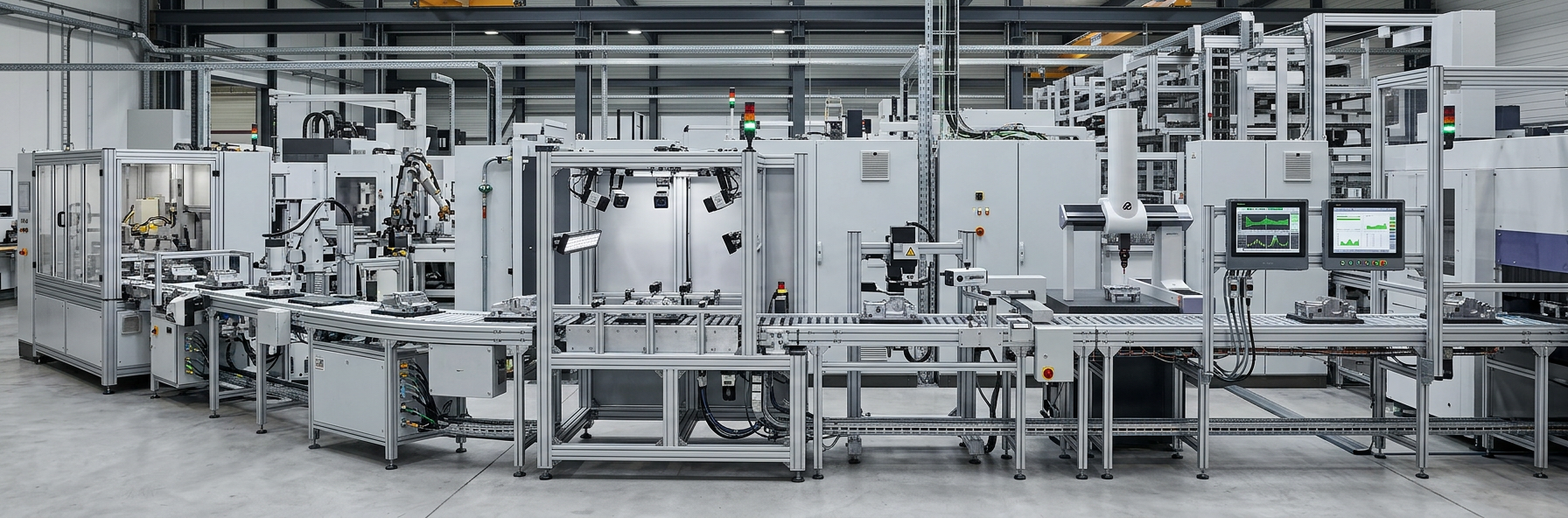
A quality problem is not always visible at the moment it begins.
A product may pass through several stages before an abnormal result is discovered.
If production records, machine conditions, material information, and inspection results are connected, engineers can investigate the process with more context.
A useful chain is:
Material → Process Conditions → Equipment State → Production Event → Inspection → Quality Result
This can help answer questions such as:
- Did the issue occur during a particular process stage?
- Was equipment behavior unusual at the time?
- Did the same condition appear in previous production?
- Was a material or process change involved?
- Does the problem occur repeatedly under similar conditions?
The goal is not to replace quality engineering with software.
It is to make the investigation less dependent on isolated records.
7. Digital Dashboards Change How Managers Consume Information
Factories can generate more information than one person can reasonably review.
That creates another challenge.
More data does not automatically mean better management.
If a dashboard contains hundreds of indicators without clear priorities, managers may struggle to determine which information requires action.
A useful operational display should answer practical questions.
| Area | Useful Question |
|---|---|
| Production | Are current activities progressing as planned? |
| Equipment | Which assets need attention? |
| Quality | Are unusual trends appearing? |
| Maintenance | What work is currently pending? |
| Materials | Is required material available? |
| Planning | Does the current schedule still match conditions? |
| Energy | Are consumption patterns changing? |
Good visualization is therefore part of digital transformation.
The purpose of a dashboard is not to display technology.
Its purpose is to reduce the effort needed to understand the factory.
8. Automation And Digital Management Serve Different Purposes
Automation and digital management are closely related, but they are not the same thing.
An automated control loop might work like this:
Sensor → Controller → Output → Actuator
The system detects a condition and responds according to programmed logic.
A management information loop is broader:
Machine Data → Data System → Analysis → Management Decision → Operational Action
One deals mainly with controlling a physical process.
The other deals with understanding and coordinating that process.
A factory can therefore have highly automated equipment while still relying on disconnected spreadsheets, reports, or manual communication for management activities.
Digital transformation addresses this information layer.
9. Industrial Connectivity Is The Foundation
For digital systems to work effectively, equipment needs a practical way to exchange information.
Industrial connectivity can involve:
- Control networks
- Industrial Ethernet
- Remote I/O
- Sensors
- Gateways
- Data collection systems
- Edge devices
- Factory network infrastructure
Older equipment can create a particular challenge.
A production facility may contain machines installed at different times, using different control architectures and communication methods.
The result can be a mixed environment.
A Typical Integration Challenge
| Existing Situation | Digitalization Challenge |
|---|---|
| Older machine | Limited data access |
| Different control systems | Data compatibility |
| Separate databases | Information fragmentation |
| Manual records | Delayed updates |
| Isolated equipment | Limited visibility |
| Multiple departments | Different data structures |
This is why digital factory projects often involve integration work rather than simply installing a new application.
10. Edge Computing Brings Processing Closer To Equipment
Not every piece of industrial information needs to travel to a central system before it can be processed.
Edge computing places processing capability closer to machines and local control environments.
This can support applications that require:
- Local data processing
- Rapid response
- Filtering of machine information
- Local condition monitoring
- Reduced dependence on external connections
A simple architecture could look like:
Machine → Local Processing → Relevant Information → Factory System
The local layer can handle information that does not need to be transferred in its raw form.
This can be particularly useful when equipment generates large volumes of operational data.
11. Artificial Intelligence Adds New Analytical Possibilities
Artificial intelligence is receiving increasing attention in manufacturing because industrial environments can generate large datasets.
Potential applications include:
- Detecting unusual equipment behavior
- Identifying production patterns
- Supporting quality analysis
- Reviewing maintenance history
- Assisting production planning
- Examining energy consumption
- Supporting process analysis
However, the quality of the result depends heavily on the quality and context of the underlying information.
A useful sequence is:
Reliable Data → Correct Context → Appropriate Model → Human Review → Factory Action
This point is easy to overlook.
An algorithm may identify a pattern, but engineers still need to determine whether that pattern has a meaningful physical explanation.
Industrial knowledge remains important because manufacturing processes involve real equipment, materials, operating conditions, and production constraints.
12. Digital Twins Can Support Planning And Simulation
A digital twin is a digital representation of a physical asset, process, or production environment.
In manufacturing, such models can support questions that are difficult or expensive to test directly on the production floor.
Possible applications include:
- Production layout planning
- Equipment placement
- Process analysis
- Capacity planning
- Maintenance planning
- Production flow studies
- Scenario evaluation
For example, before changing a production layout, engineers can examine material movement and equipment relationships in a digital environment.
The value comes from answering a practical question.
A digital model should not be created simply because having one appears technologically attractive.
13. Inventory Management Becomes More Closely Linked To Production
Material management is another area affected by connected information.
Inventory levels are influenced by production schedules, material consumption, incoming supply, quality holds, and changes in production priorities.
A simplified relationship is:
Production Plan → Material Requirement → Inventory Status → Purchasing Activity
When the production plan changes, material requirements may change with it.
When equipment becomes unavailable, planned material consumption may also shift.
When quality issues place material on hold, available inventory can change without a corresponding physical movement.
Connecting these events helps managers understand why inventory conditions change rather than simply seeing the final quantity.
14. Energy Information Can Become Part Of Production Analysis
Energy management is increasingly connected with production data.
Rather than viewing energy consumption as a completely separate utility issue, factories can compare it with operating conditions.
Questions may include:
- Which production areas consume more energy?
- How does consumption change with machine activity?
- What happens when equipment is idle?
- Are energy patterns changing over time?
- Do unusual operating conditions correspond with changes in consumption?
The useful insight often comes from the relationship between energy and production.
A consumption figure without context tells only part of the story.
15. Digital Tools Can Help Identify Production Bottlenecks
A bottleneck is not always caused by the machine with the longest processing time.
Delays can also come from:
- Material movement
- Changeovers
- Quality inspection
- Equipment availability
- Maintenance activities
- Waiting between process stages
- Production scheduling
- Limited downstream capacity
Connected production records can make these relationships easier to examine.
For example:
Process A → Process B → Inspection → Process C
If Process C regularly waits for inspection results, increasing the speed of Process B may not solve the real constraint.
Digital analysis can help management look at the entire production flow rather than focusing on one machine.
16. Factory Digitalization Also Changes Decision-Making
The real effect of connected technology appears when information changes what people do.
Consider several examples.
Equipment Decision
Historical machine conditions show repeated abnormal behavior.
Response: Maintenance investigates the pattern before it becomes a larger production issue.
Planning Decision
Current equipment availability differs from the original schedule.
Response: Production planning reviews the affected sequence.
Quality Decision
Inspection results repeatedly correspond with a particular process condition.
Response: Engineering investigates the process relationship.
Inventory Decision
Production requirements change.
Response: Material planning reviews purchasing and warehouse requirements.
In each example, the technology is not the final result.
The decision is the result.
17. Cybersecurity Must Grow Alongside Connectivity
Connecting more factory equipment also creates more communication paths.
That makes cybersecurity an important part of digitalization.
Areas that deserve attention include:
- Network segmentation
- User access
- Device management
- Software updates
- Backup procedures
- Remote connections
- Data protection
- System monitoring
- Incident response
Industrial environments have different requirements from ordinary office networks.
A change to a control system can influence physical equipment, production continuity, or process behavior.
For that reason, digital systems should be introduced with cooperation between automation engineers, IT teams, maintenance personnel, and factory management.
18. People Still Provide Essential Industrial Knowledge
Digital transformation does not remove the need for experienced technicians, operators, engineers, or managers.
In fact, their knowledge can become more valuable when combined with better information.
An experienced technician may notice an unusual sound, vibration, sequence behavior, or machine response long before a formal alarm appears.
A digital monitoring system can then provide supporting information.
This creates a useful combination:
Operator Experience + Equipment Data + Engineering Analysis
Technology provides additional visibility.
People provide context.
The strongest operational decisions often require both.
19. Start With A Factory Problem, Not A Technology Trend
One of the easiest ways to make digitalization complicated is to begin by asking, "Which new technology should we install?"
A better question is:
"Which factory problem needs better information?"
Possible starting points include:
- Production status is difficult to track
- Maintenance problems recur without clear patterns
- Quality investigations take too long
- Production schedules frequently become outdated
- Inventory information is fragmented
- Machine data is difficult to access
- Management reports require excessive manual work
Once the problem is clear, the technology becomes easier to evaluate.
A Practical Planning Framework
| Question | Purpose |
|---|---|
| What problem needs attention? | Define the actual objective |
| What information is missing? | Identify data requirements |
| Where does that information originate? | Locate equipment and systems |
| Who needs the information? | Define users |
| What decision will it support? | Define the use case |
| What action follows the decision? | Connect data to operations |
| How will the result be reviewed? | Support continuous improvement |
This prevents a common problem: collecting large amounts of data without a clear operational purpose.
20. A Step-By-Step Path Toward Digital Factory Management
A factory does not need to digitize every department at the same time.
A staged approach can make implementation easier to control.
Step 1: Map The Existing Environment
Identify production equipment, control systems, data sources, maintenance workflows, quality systems, and reporting methods.
Step 2: Find The Information Gaps
Determine where managers and engineers lack timely or reliable information.
Step 3: Select A Practical Use Case
Choose a problem with a clear operational purpose.
Step 4: Connect Relevant Equipment
Collect information from the machines and systems directly related to that use case.
Step 5: Organize The Data
Create consistent definitions and structures so information can be compared.
Step 6: Build Useful Visualization
Present information in a form that production, maintenance, engineering, and management teams can understand.
Step 7: Add Analysis
Use historical and current information to identify trends, abnormal conditions, and relationships.
Step 8: Connect Insights To Actions
Define what happens when the system identifies a condition that requires attention.
Step 9: Review And Expand
Once the process proves useful, consider whether the same approach can support another factory function.
This staged method keeps technology connected to actual manufacturing needs.
What Should Factory Managers Consider Before Digitalizing?
Before introducing a new digital system, several practical questions deserve attention.
Data availability: Is the required information already generated by existing equipment?
Data quality: Can the information be trusted and interpreted correctly?
System compatibility: Can existing machines and software exchange information?
User needs: Who will actually use the system?
Operational response: What happens when the system identifies an abnormal condition?
Maintenance: Who will maintain the digital infrastructure?
Security: How will access and connected devices be managed?
Scalability: Can the solution support future production changes?
A technology project becomes much more useful when these questions are answered before implementation begins.
The Factory Is Becoming A Connected Information System
The physical factory remains at the center of manufacturing.
Machines still perform mechanical work. Sensors still measure physical conditions. Controllers still manage sequences. Operators and engineers still make practical decisions.
What is changing is the information layer surrounding these activities.
A connected manufacturing environment can create a continuous loop:
Physical Process
↓
Data Collection
↓
Information Integration
↓
Analysis
↓
Management Decision
↓
Operational Action
↓
New Production Data
The final stage feeds information back into the system.
That creates a cycle rather than a one-way report.
Five Changes Worth Watching
The development of digital factory management can be understood through five broad changes.
| Traditional Approach | Connected Approach |
|---|---|
| Periodic reporting | More current operational visibility |
| Isolated equipment data | Connected equipment information |
| Reactive maintenance | Condition-informed maintenance |
| Separate departmental records | Cross-functional information |
| Manual analysis | Data-supported analysis |
These changes do not happen automatically.
They depend on suitable infrastructure, clear processes, reliable data, and people who know how to use the information.
What Will Digital Factory Management Look Like In Practice?
The future factory is unlikely to be defined by one piece of technology.
Instead, several layers will work together.
At the equipment level, sensors and controllers will continue collecting process information.
At the connectivity level, industrial networks will move information between machines and systems.
At the data level, platforms will organize information from different sources.
At the analytical level, software will identify patterns and unusual conditions.
At the management level, people will use that information to make decisions about production, maintenance, quality, materials, and planning.
The result is not a factory where technology makes every decision.
It is a factory where important decisions can be supported by information that is easier to access, compare, and understand.
Digital technologies are changing factory management by connecting physical production with a wider information environment. Sensors, controllers, networks, data systems, analytics, monitoring tools, and digital models each contribute a different layer.
The real transformation happens when these layers work together.
A machine condition can become maintenance information. A production delay can become planning information. A quality result can be connected with process conditions. An inventory change can be understood alongside production requirements.
This approach gives manufacturers a clearer way to understand what is happening across the factory and why it is happening.
The goal is not to digitize everything simply because digital tools are available. A more practical approach is to identify where information is missing, connect the relevant systems, and turn that information into decisions that improve everyday factory operations.
That is where digital technology becomes part of factory management rather than simply another layer of factory equipment.